A 34-hectare site in Amber Valley is beginning a remarkable transformation into a thriving nature recovery site, with ambitious plans to create new habitats, restore wildlife and reconnect landscapes across the borough.
Derbyshire Wildlife Trust recently welcomed members of Amber Valley Borough Council and the Amber Valley Nature Network to Common Farm in Nether Heage to discuss the future vision for the site, which was purchased by the trust in 2024.
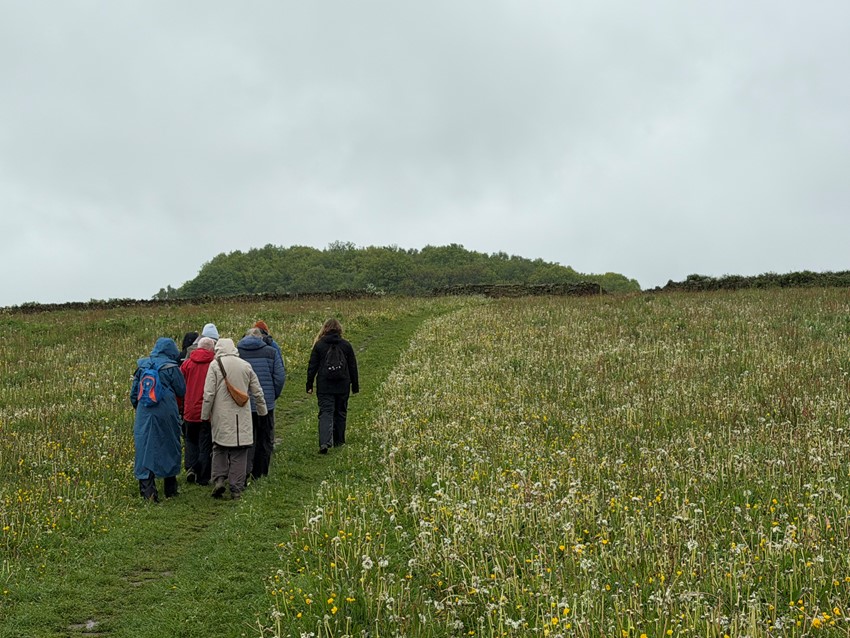
(Pictured above: Representatives from Amber Valley Borough Council, the Amber Valley Nature Network and Derbyshire Wildlife Trust walk through Common Farm in Nether Heage during a visit to discuss the site's future vision for nature recovery.)
Common Farm is now set to become part of a growing network of connected habitats across Derbyshire, helping wildlife move more freely through the landscape while creating new opportunities for nature to flourish.
The project also supports wider work being coordinated through the council’s Amber Valley Nature Network, which brings together organisations, community groups, nature organisations, local residents and councillors to support nature recovery across the borough.
Leading the visit was Amy Bennett, Derbyshire Wildlife Trust’s Living Landscapes Officer, who explained how the organisation hopes to create a balance of open grassland, scrub and woodland cover while allowing the site to develop with minimal intervention.
Standing among long grass and expanding hedgerows, Amy described the project as being “right at the start of its journey”.
She said: “It’s an exciting project because we’ve effectively got a blank canvas here, with so much potential and opportunity for collaborative work.
“One of our main aims is to bring wildlife back and let nature take the lead. It’s about creating the right conditions and allowing natural processes to shape the site over time.”
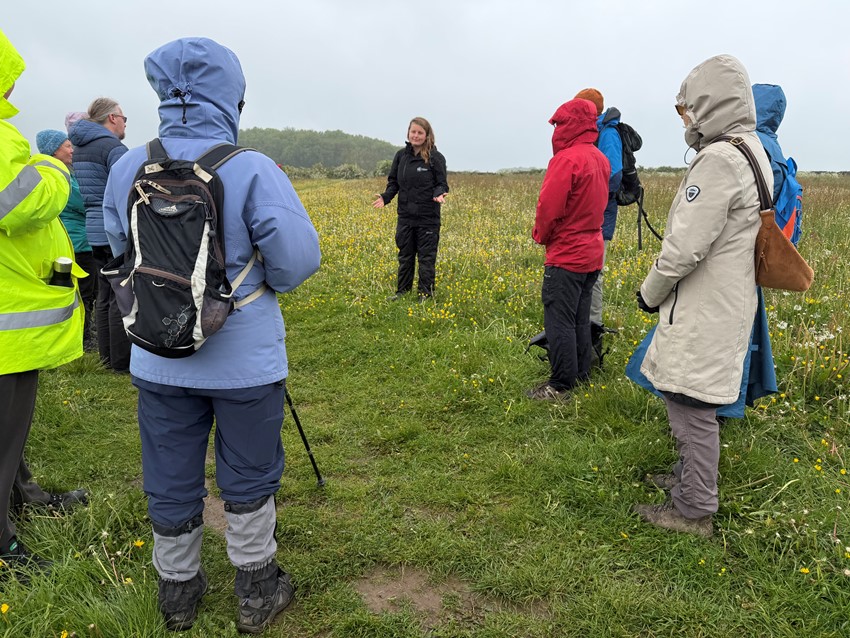
(Pictured above: Amy Bennett, Living Landscapes Officer at Derbyshire Wildlife Trust, explains the long-term vision for Common Farm during the site visit.)
The Trust hopes that the site will become a rich habitat mosaic, with greater areas of woodland and scrub habitats while maintaining large areas of open grassland to support a diversity of species.
Already, nature is beginning to respond.
Curlews bred on site during the first year, while kestrels, skylarks and five species of UK owl have already been recorded across the landscape.
Flocks of linnets and goldfinches have also been seen feeding on site, with juveniles recorded alongside them, a positive sign that food sources are developing naturally.
Common Farm has now also been registered with Natural England as a habitat bank, with Derbyshire Wildlife Trust committing to monitoring and managing the site over the next 30 years.
The trust is using baseline ecological data and yearly monitoring to measure how the landscape changes over time, with early signs already showing positive improvements.
Amy explained that when Derbyshire Wildlife Trust first took ownership of the site, sections of hedgerow were classed as being in poor condition. Through natural regeneration and reduced intervention, those same hedgerows are now being recorded in good condition.
While visitors may not yet see dramatic physical changes on site, extensive surveying, ecological monitoring and planning work is already taking place behind the scenes.
Future plans for the site will include the introduction of grazing animals to deliver natural levels of ecological disturbance across the landscape.
Their grazing, digging and rooting behaviour will create bare ground, puddles and other features that support a greater diversity of plants, insects and the species that depend on them.
The trust is also exploring ways to restore wetter areas of grassland by identifying and removing historic drainage systems across the site.
Allowing water to settle more naturally will help create better conditions for wading bird species already found nearby at Wyver Lane Nature Reserve.
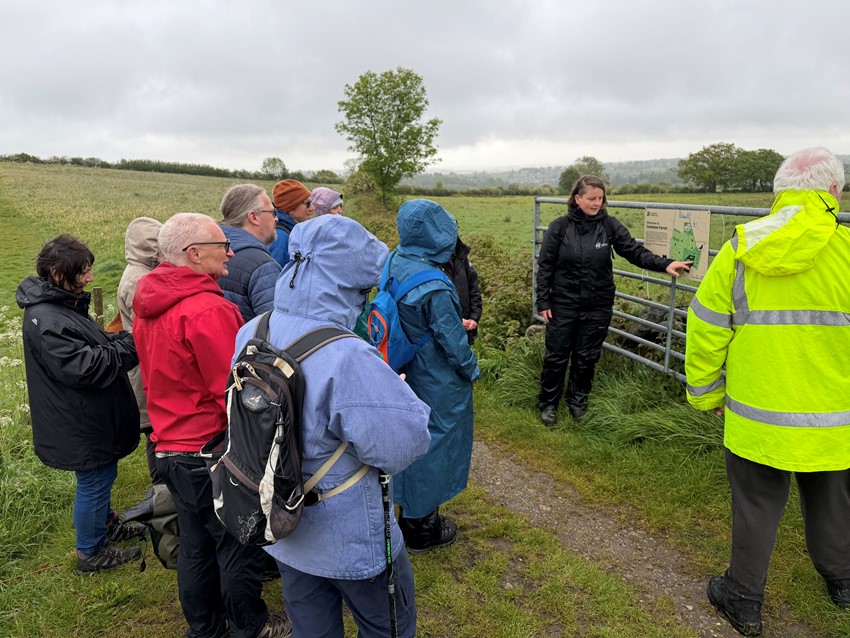
(Pictured above: Amy Bennett discusses future habitat creation and connectivity plans for Common Farm with visitors during the tour.)
The project also places strong emphasis on habitat connectivity, with Common Farm sitting alongside neighbouring woodland habitats and wider nature recovery areas across Amber Valley.
Councillor Chris Emmas-Williams, Leader of Amber Valley Borough Council, said: “We’re incredibly lucky to have a site like this in Amber Valley and it was fascinating to hear more about the long-term vision for Common Farm and the approach Derbyshire Wildlife Trust is taking.
“Sites like Common Farm show the important role local partnerships can play in supporting nature recovery and tackling climate challenges across the borough.
“What stood out during the visit was the long-term thinking behind the project and the commitment to allowing habitats to recover naturally over time.
“We’re proud to support initiatives like this through the Amber Valley Nature Network and we’re excited to see how the site develops in the years ahead. This is exactly the kind of collaborative work that can make a real difference for wildlife, landscapes and communities across Amber Valley.”
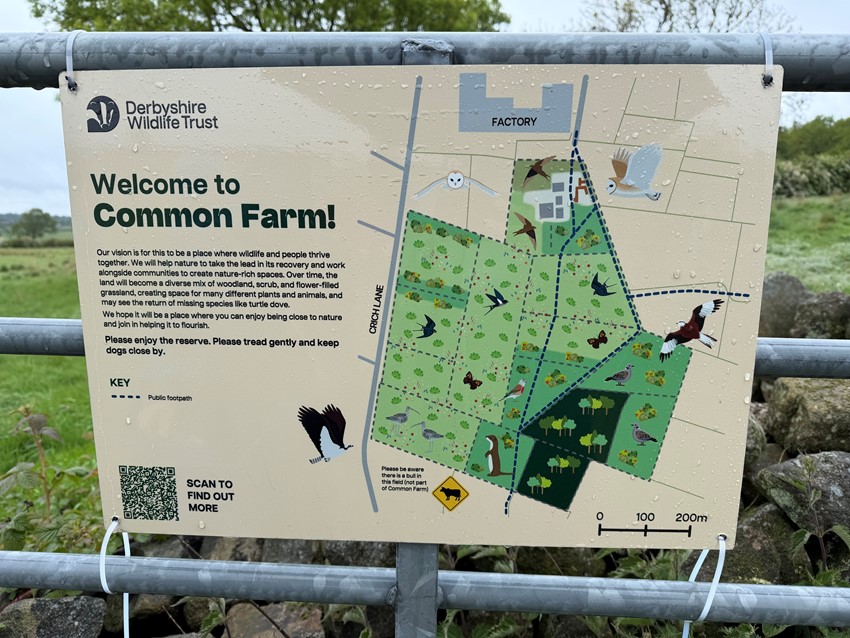
(Pictured above: The Common Farm site in Nether Heage forms part of Derbyshire Wildlife Trust's long-term plans for nature recovery and habitat connectivity across the landscape.)
Among those attending the visit was Rosalynde Grum from the Quarndon Community Group and Amber Valley Nature Network.
She said: “I found the visit fascinating and I’m really interested in seeing the site develop over time.
“What particularly interests me is the connectivity between sites across the borough and how projects like this can support nature on a much wider scale. I’ll certainly be spreading the word and encouraging people to take an interest in this important site for Amber Valley.”
Residents interested in finding out more about the Amber Valley Nature Network can contact climate@ambervalley.gov.uk.
Contact the team directly on 01773 570222 or email enquiry@ambervalley.gov.uk
