Food waste recycling


We’re getting ready to introduce weekly food waste recycling across Amber Valley from June 2026 as part of a phased roll-out. 

The roll-out of the new service is supported by Government funding and will help us recycle more, reduce the amount of waste going to disposal and turn leftover food into something useful, such as energy and fertiliser for local farmland.

To help you get started, we’ve put together a simple food waste leaflet with the key information about how the service works and what to expect when your caddies and collections begin.

We know this is a new routine for many households, so we have put together some frequently asked questions below to guide you through what you can put in your caddy, how collections will work and what to expect. Our aim is to make the service as simple and straightforward as possible.

If you have a question that is not answered here, please get in touch by emailing refuse@ambervalley.gov.uk.

Your starter pack

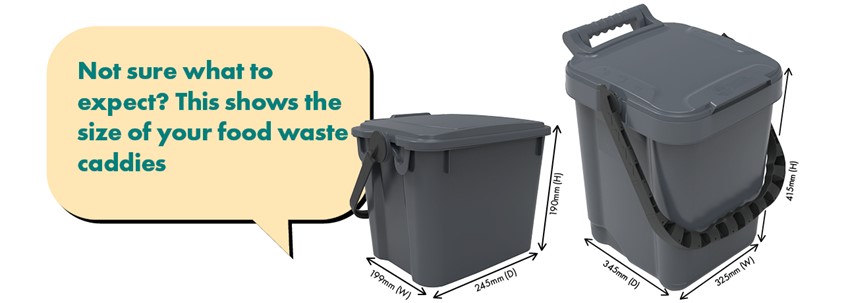
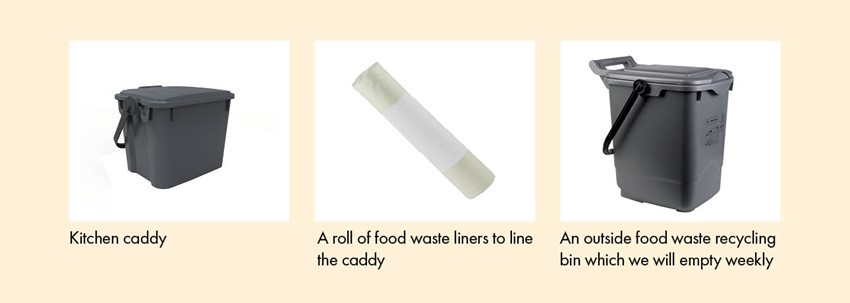
As your area becomes part of the roll-out, you will receive a small 5L indoor kitchen caddy, a larger 23L outdoor caddy, and a supply of biodegradable liners. We will share more details with you closer to your start date as different areas of the borough will receive their caddies and start collections at different times of the year. 
 

Frequently asked questions

Under the new "Simpler Recycling" legislation, all local authorities in England must collect core recyclable waste from households, including food waste separately. The food that we throw away negatively impacts on the amount of carbon dioxide we emit into the atmosphere. The new food waste service will also contribute to Amber Valley Borough Council’s objective to become carbon-neutral by 2030.

If you put your food waste in your general household bin, it just ends up being incinerated (or landfilled). So please help Amber Valley recycle as much as possible and use your food waste bin when it arrives.

Food waste that is collected in your food caddy is turned into fertiliser and energy which is better for the environment.

If you separate your food waste and don’t put it in your kitchen bin, it should mean a cleaner and less smelly kitchen bin due to the frequency of collection.

As well as the environmental benefits, using your food waste bin may help you save money. You'll be able to see what types of food you and your family are throwing away and how much, then you could make changes to your shopping list, and save money on your grocery bill.

The average household throws away £600 worth of food a year.

We’re getting ready to introduce weekly food waste recycling across Amber Valley from June 2026 as part of a phased roll-out. Your new caddy starter pack will be provided in advance of the launch date in your area, this will be communicated to you nearer the time by the council.

Your new caddies starter pack will be provided in advance of the launch in your area, this will contain information on your collection start date and it will also be communicated to you nearer the time by the council.

You can include all food waste from the home, including leftovers from meals, food that has gone past its use by date, and any other food waste from your kitchen, including the following:

  • meat - raw and cooked, bones
  • fish/shellfish - raw and cooked, including bones and shells
  • eggs and egg products (including eggshells)
  • dairy products (including cheese and yogurts)
  • bread, cakes and other baked goods
  • pasta and rice
  • beans and pulses
  • fruit - raw and cooked
  • salad and vegetables - raw and cooked
  • tea bags (including the bag) and coffee grounds
  • lard and other hard fats
  • tinned and dry pet food
  • small amounts of gravy, sauces or custard left on food
  • any meal leftovers

Please do not put any of the following materials in your food waste collection:

  • packaging
  • cardboard
  • foil
  • plastic film or
  • glass
  • other recycling
  • garden waste
  • animal faeces, cat litter, straw or other animal bedding
  • liquids

Yes, your food waste will be collected on the same day as your usual bin collections.

Food waste is collected every week in a separate vehicle to your recycling and general waste – in dedicated food waste vehicles.  Please make sure your external (large) food waste caddy is placed out for collection by 6am on your normal scheduled collection day.

Food waste collected in Amber Valley will be sent to Severn Trent Green Power, specialists in food waste recycling.

At their facility, food waste is treated using anaerobic digestion – a natural process where food waste is broken down to produce renewable energy and a nutrient‑rich fertiliser. This helps reduce the amount of waste sent to landfill and supports more sustainable waste management.

You can find out more about how food waste is recycled by Severn Trent Green Power on their website: https://www.stgreenpower.co.uk/food-waste-recycling

Yes. Although some households may not have a lot of food waste, it is still important all food waste is sent to recycling rather than being sent for disposal.

Where food waste collections have been introduced elsewhere, residents have realised just how much food they throw away. This has resulted in them taking steps to reduce food waste and food bills.

Because your food waste will be collected weekly, it reduces the likelihood of any problems with odours or flies.

Please only use biodegradable caddy liners, we will provide a starter pack for all residents (52 liners on a single roll). The facility that processes your food waste can’t accept standard plastic bags, so using the correct liners is really important.

A reminder slip is included inside the roll to let you know when it’s time to refill.

If you already receive an assisted collection, this will automatically include your food waste caddy.


Some people have more food waste than others. At some point, everyone will put some food waste into their general waste which goes to EFW (Energy from Waste) or landfill. It could be a bit of stale bread, banana skins, teabags, bones from a Sunday roast or even something lurking at the back of the fridge that you had forgotten about. All of these, if removed from all packaging and put in your food waste caddy, can be recycled to create energy and to produce a liquid fertiliser for local farmland.

If a spill happens before collection, it’s the resident’s responsibility to clean it up. If a spillage occurs during the collection itself, Amber Valley Norse will take care of it.

If your caddy is damaged and can’t safely contain the contents, please don’t present it for collection — just get in touch with us and we’ll arrange a replacement.

Right now, most food waste goes into your general rubbish bin, where it can sit for up to two weeks. With the new service, food waste will be collected every week, so it won’t sit around for as long.

In reality, it’s the same food waste you already throw away, just in a separate container that’s emptied more often.

Your outdoor caddy also has a secure, lockable lid to keep everything safely contained and prevent access by wildlife.

Separating it out means your general bin stays cleaner too.

And instead of being thrown away, it will be turned into energy and fertiliser.

Food waste isn’t any more of a health risk in the food waste caddy than it is in your usual refuse bin — the separate collection service simply gives you a different container so the waste can be recycled instead of thrown away.

As with any household waste, it’s best to keep food waste out of reach of young children. Please transfer it to your 23L lockable outdoor caddy as soon as you can.

We’d also encourage you to present your outdoor caddy for collection every week, even if there’s only a small amount inside. This helps keep everything clean and hygienic.

Food waste will be rolled out to these properties from January 2027 as part of a phased roll out due to the need to liaise with landlords and ensure adequate storage space in communal areas for food waste recycling bins. We are looking at a range of options due to the different types of communal bin areas and will communicate with you nearer the time.

Separating food waste has some important environmental benefits. When food waste is kept out of general rubbish, less ends up in landfill where it produces harmful greenhouse gases.

Instead, it can be processed and turned into renewable energy and nutrient-rich fertiliser for farmland. It also helps keep other recycling cleaner and reduces smells in black bins at home.

It’s a small change that makes a real difference environmentally.

No - please only use your caddy for food waste. Even though some items are labelled as biodegradable, they can’t be processed through our food waste system. Keeping to food-only items helps everything run smoothly.

A 23-litre caddy is usually more than enough for a week’s worth of food waste. If you’re finding you regularly fill it, it might be helpful to look at portion sizes or plan ahead to reduce food waste where possible — this can also help save money.

If you still feel you need more capacity, please get in touch and we can look at whether an additional caddy can be provided in exceptional circumstances.

No, newspaper and foil can contaminate the load, so they shouldn’t be used. Food waste can go straight into your kitchen caddy, and once you’ve emptied it you can simply give it a rinse with hot, soapy water.

Yes, it is quite acceptable to put leftover pet food in your food caddy.


Need further help or information?

Contact the team directly on 01773 841326 or email refuse@ambervalley.gov.uk