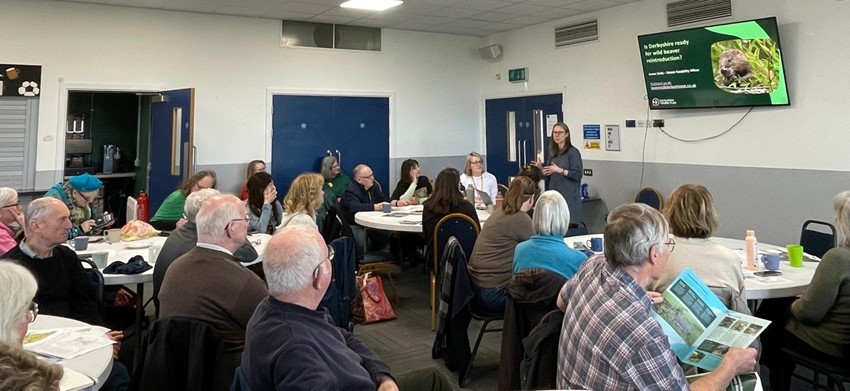
The Amber Valley Nature Network brings together local nature groups, organisations, councillors and residents who have an interest in nature to discuss local projects and to inspire people to get involved either by joining a local group or making a change in your garden or local area to benefit nature.
If you would like to be invited to future meetings, please email: climate@ambervalley.gov.uk.
You can read more about previous meetings below:
Amber Valley Borough Council is part of the Local Area Energy Partnership, which is a collaboration of councils across Derbyshire and Nottinghamshire, and in partnership with charities Marches Energy Advice and Nottingham Energy Partnership. You can find more information on climate change, including homes and energy, community energy, food and nature, sustainable travel, spending and saving and adapting to climate change on the website Derbyshire and Nottinghamshire Climate Network - climate action.
To find out if there are any local groups in your area or ways you can get involved, you could ask your local Parish or Town Council for information. Please visit our website for contact details and select which Parish or Town council you wish to contact - Parish and town councils.
You can also visit the Connected Amber Valley website for climate and nature volunteer opportunities.
If you are part of a local climate or nature group and you would like to add your group to a map of local nature and climate activity for other people to get involved, please contact us at: climate@ambervalley.gov.uk.
Small everyday actions can significantly reduce carbon emissions and can support nature.
To understand your own carbon footprint, you can use the carbon footprint calculator on the WWF (Worldwide Fund) for Nature website - WWF Footprint Calculator The tool asks questions about your habits and lifestyle and will give you a score and ideas on how you can reduce your footprint.
There are lots of ways you can reduce your footprint, and they don’t need to be big changes.
For more information, please visit: Eight tips to eat more sustainably | WWF.
For information on the Council’s recycling services, please visit Rubbish, waste and recycling.
To find a local business who can repair specialist items or repair something specific please visit: We Are Repairs | Join The Repair Revolution.
Amber Valley Borough Council is committed to helping residents improve energy efficiency in their homes. We work in partnership with Marches Energy Advice (MEA). For further information and advice see Improve your home’s energy efficiency.
There is a range of grants available for Amber Valley residents that help to reduce fuel bills and assist in the delivery of energy savings measures see Help available for Amber Valley residents.
For advice on renewable energy technology at home see Renewable energy at home.
There are simple actions you can take at home to help nature recover:
You can access different guides on how to attract wildlife to your garden or outdoor space, by helping hedgehogs, attracting butterflies, caring for birds, building a pond etc! Please visit Wildlife gardening | Derbyshire Wildlife Trust.
Derbyshire Wildlife Trust hosts the Derbyshire Biological Record Centre, which collects, combines and verifies data on species across the country, and helps with monitoring, data analysis and it feeds into planning decisions.
You can submit your wildlife sightings to the Biological Records Centre. To find out more, sign up for free and submit your sighting here please visit - Derbyshire Biological Records Centre | Derbyshire Wildlife Trust.
Contact the team directly on 01773 841332 or email climate@ambervalley.gov.uk
